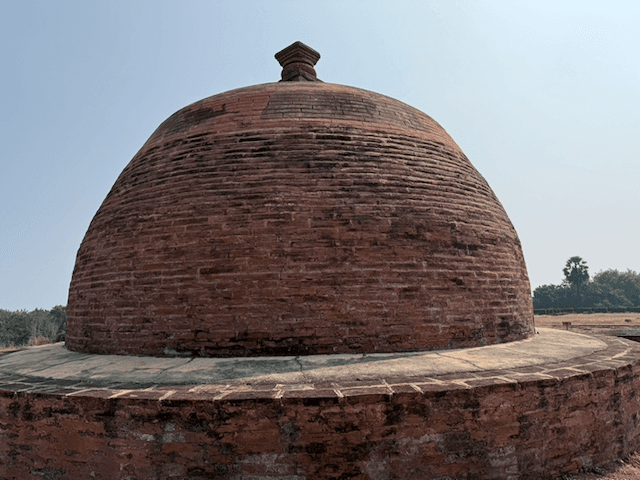
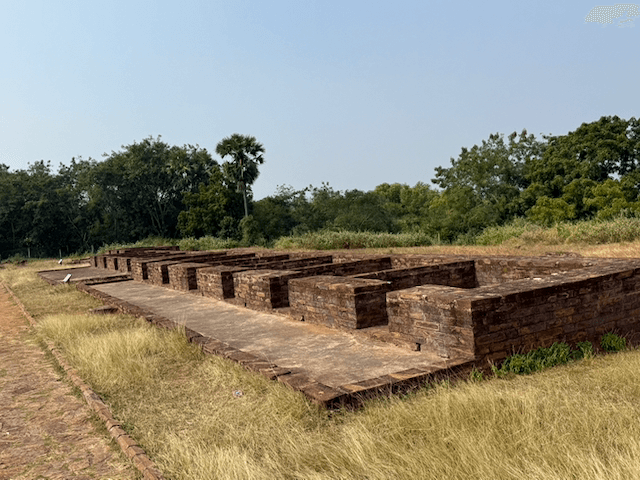
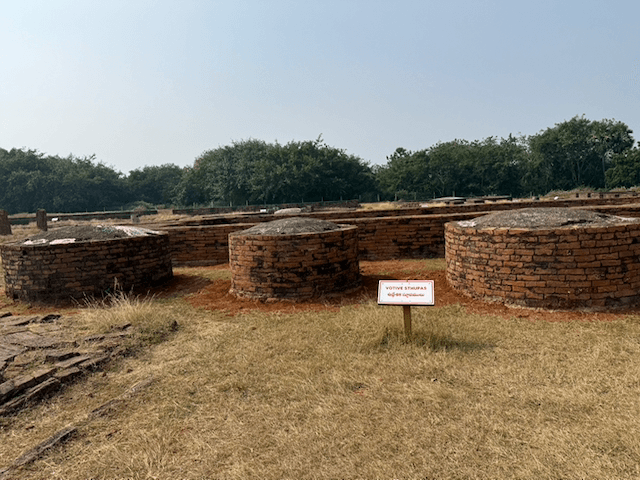
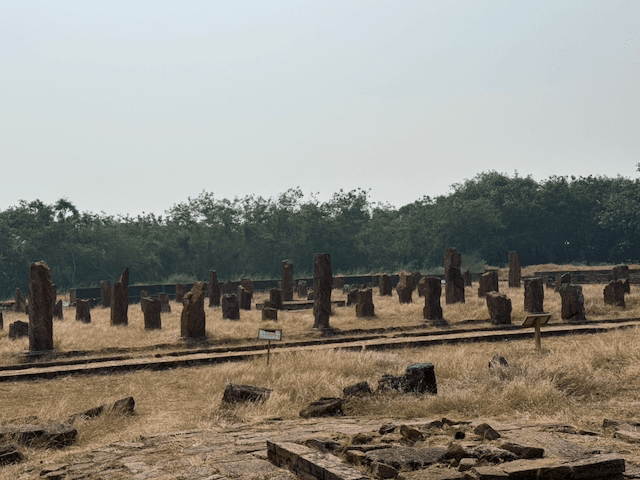
## History Thotlakonda (also spelled Totlakonda, ancient name: Senagiri) is a significant Buddhist complex belonging to the **Hinayana/Nikaya tradition** of Buddhism. It flourished between approximately **200 BCE and 200 CE**, serving as both a religious and academic center for monks and maritime traders. The site was discovered via an **aerial survey by the Indian Navy** and excavated between **1988-1993** by the Andhra Pradesh State Archaeology Department. ## Archaeological Discoveries The excavations revealed remarkable structures including: - A **Maha-Stupa** (main stupa, restored in 2021) - 16 votive stupas - Chaitya-grihas (apsidal and round prayer halls) - Multiple viharas (monastery cells) - A stone-pillared congregation hall - Rock-cut cisterns for water storage - Paved stone pathways - Dining hall/refectory - Storage buildings (bhandagaras) ### Artifacts Found - **Satavahana lead coins** and **Roman silver coins** indicating extensive trade - Terracotta tiles and pottery - Stucco decorative elements - Buddha footprints (Buddha padas) with Ashtamangala symbols - Inscriptions in Brahmi script ## Significance Located near the historic maritime trade routes, Thotlakonda was an important **trans-oceanic stop** for pilgrims and traders. Its position at 83.3° E longitude made it a strategic point for Roman trade connections. The complex served multiple purposes beyond religious worship - it was an academic center providing food, clothing, and medicines to monks and travelers. ## Protected Status Thotlakonda is a **protected monument** under the Andhra Pradesh Ancient & Historical Monument and Archaeological Sites & Remains Act, 1960. The protected core area covers approximately 120 acres including the hilltop and ruins.
View Thotlakonda Buddhist Complex on the map and get directions
Explore more views of Thotlakonda Buddhist Complex - Click on any image to view in full size
Foreign nationals: ₹100. Children under 15 free. Camera fee may apply.